
High Fiber Foods: 30 Best Foods, Fiber Amounts & Daily Intake
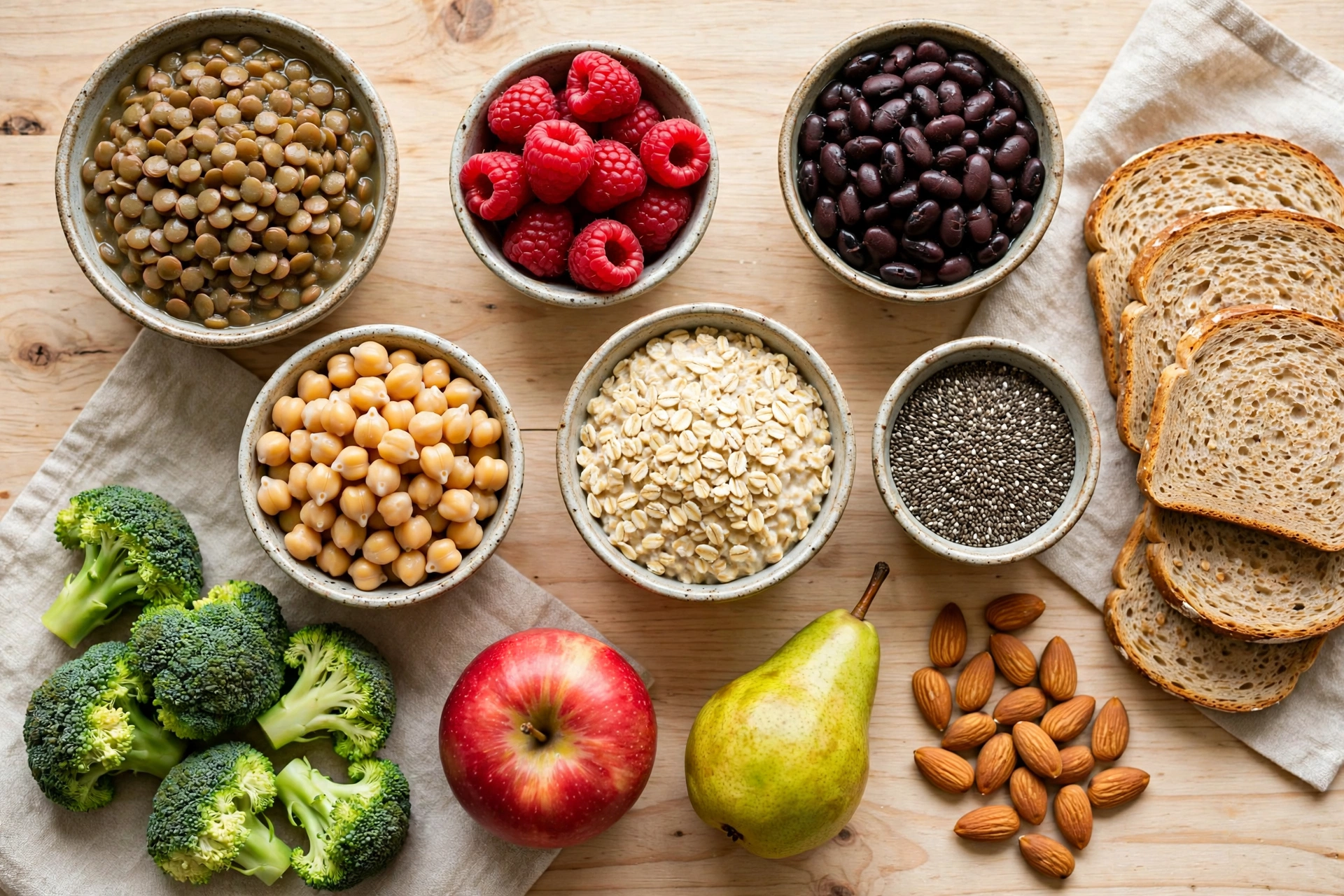
If you want to eat more fiber, start with everyday foods such as lentils, beans, peas, raspberries, pears, broccoli, oats and whole grains. These high fiber foods can help you meet your daily fiber needs while adding variety to your meals. The list and chart below show how much fiber common foods provide, so you can choose options that fit your taste, budget and routine.
30 Best High Fiber Foods
Fiber is found naturally in plant foods. Beans, lentils and split peas are among the richest choices per serving, while fruits, vegetables, nuts, seeds and whole grains make it easier to add fiber throughout the day. The amounts below are approximate and depend on serving size and preparation.
High Fiber Foods Chart
| Food | Serving Size | Fiber |
|---|---|---|
| Split peas, cooked | 1 cup | 16 g |
| Lentils, cooked | 1 cup | 15.5 g |
| Black beans, cooked | 1 cup | 15 g |
| White/navy beans, canned | 1 cup | 13 g |
| Chia seeds | 1 oz (28 g) | 10 g |
| Green peas, boiled | 1 cup | 9 g |
| Raspberries | 1 cup | 8 g |
| Pear, with skin | 1 medium | 5.5 g |
| Apple, with skin | 1 medium | 4.5 g |
| Banana | 1 medium | 3 g |
| Orange | 1 medium | 3 g |
| Strawberries | 1 cup | 3 g |
| Broccoli, boiled | 1 cup chopped | 5 g |
| Brussels sprouts, boiled | 1 cup | 4.5 g |
| Baked potato, with skin | 1 medium | 4 g |
| Sweet corn, boiled | 1 cup | 4 g |
| Carrot, raw | 1 medium | 1.5 g |
| Whole-wheat spaghetti, cooked | 1 cup | 6 g |
| Pearled barley, cooked | 1 cup | 6 g |
| Quinoa, cooked | 1 cup | 5 g |
| Oatmeal, cooked | 1 cup | 4 g |
| Brown rice, cooked | 1 cup | 3.5 g |
| Air-popped popcorn | 3 cups | 3.5 g |
| Whole-wheat bread | 1 slice | 2 g |
| Almonds | 1 oz (about 23) | 3.5 g |
| Pistachios | 1 oz (about 49) | 3 g |
| Sunflower kernels | 1/4 cup | 3 g |
| Chickpeas, cooked | 1/2 cup | about 6 g |
| Kidney beans, cooked | 1/2 cup | about 7 g |
| Avocado | 1/2 fruit | about 5–7 g |
Food values are estimates, not exact guarantees. Different varieties, brands, cooking methods and serving sizes can change the amount. For packaged foods, check the Nutrition Facts label. Values are compiled mainly from Mayo Clinic food tables and other nutrition references.
High Fiber Fruits
Fruit is an easy way to add fiber to breakfast, snacks or dessert. Choose whole fruit more often than juice because most of the fiber stays in the fruit itself. When possible, eat edible skins after washing the fruit.
Raspberries are one of the highest-fiber fruit choices, providing about 8 grams per cup. A medium pear with its skin has around 5.5 grams, and a medium apple with its skin has about 4.5 grams. Bananas, oranges and strawberries provide about 3 grams per listed serving.
Try adding berries to oatmeal, eating an apple as a snack, or serving sliced pear with plain yogurt. These simple choices add fiber without requiring a major change to your meals.
High Fiber Vegetables
Vegetables provide fiber along with vitamins, minerals and other nutrients. Green peas are especially useful, with about 9 grams in one cup when boiled. A cup of cooked broccoli provides about 5 grams, while Brussels sprouts provide about 4.5 grams per cup.
Baked potatoes with the skin and sweet corn each provide around 4 grams per listed serving. Carrots and cauliflower also contribute fiber and can be added to salads, soups, curries and side dishes.
High Fiber Beans, Lentils and Legumes
Beans, lentils and peas are some of the most concentrated everyday sources of dietary fiber. One cup of cooked split peas provides about 16 grams, one cup of cooked lentils provides about 15.5 grams, and one cup of cooked black beans provides about 15 grams.
Chickpeas, kidney beans, black beans and white beans are also practical options. Add them to soups, salads, rice dishes or curries. If you use canned beans, check the label and rinse them if you want to reduce some added sodium.
High Fiber Whole Grains
Whole grains contain more fiber than refined grains because they retain more of the grain kernel. Useful choices include whole-wheat pasta, barley, quinoa, oats, brown rice, whole-wheat bread and air-popped popcorn.
A cup of cooked whole-wheat spaghetti or pearled barley provides about 6 grams of fiber. A cup of cooked quinoa provides about 5 grams, while cooked oatmeal provides around 4 grams. When shopping, look for “whole wheat” or another whole grain near the beginning of the ingredient list.
Nuts and Seeds High in Fiber
Nuts and seeds can add fiber to snacks and meals. One ounce of almonds provides about 3.5 grams, while pistachios provide about 3 grams. Chia seeds are especially fiber-rich, with about 10 grams per ounce.
Sprinkle chia seeds over oatmeal, add almonds to a fruit bowl, or mix seeds into yogurt. Use portions that suit your energy needs, because nuts and seeds are also calorie-dense.
How Much Fiber Do You Need Per Day?
Daily fiber needs depend on age, sex and energy intake. A commonly used guideline is 14 grams of fiber for every 1,000 calories consumed. The following adult reference amounts are widely used:
| Group | Daily Fiber Reference |
|---|---|
| Women, ages 19–50 | 25 g |
| Men, ages 19–50 | 38 g |
| Women, age 51 and older | 21 g |
| Men, age 51 and older | 30 g |
These are general reference amounts, not a personal prescription. Needs can differ during pregnancy, breastfeeding, with certain medical conditions, or when a clinician recommends a specific diet. Ask a registered dietitian or healthcare professional if you are unsure how much fiber is right for you.
Benefits of Eating Fiber-Rich Foods
Fiber supports digestive health and helps keep bowel movements regular. Some types of fiber absorb water and soften stool, while others add bulk. Eating enough fiber as part of a balanced diet can also help you feel full for longer.
Certain soluble fibers can help reduce LDL (“bad”) cholesterol, and fiber-rich eating patterns may support blood sugar management and heart health. Benefits depend on the type of fiber, the overall diet and a person’s health. No single food prevents or treats a disease.
How to Add More Fiber to Your Daily Diet
You do not need to change your entire diet at once. Add one or two fiber-rich choices to meals you already eat, then increase gradually as your body adjusts.
- Breakfast: Add berries or a sliced pear to oatmeal.
- Lunch: Add lentils, chickpeas or beans to soup or salad.
- Dinner: Choose brown rice or whole-wheat pasta and serve it with vegetables.
- Snacks: Choose an apple, pear, a small handful of almonds or air-popped popcorn.
- Seeds: Mix chia or ground flaxseed into oatmeal or yogurt.
A Simple One-Day High-Fiber Meal Example
This example shows how fiber-rich foods can fit into ordinary meals. Portions and total fiber will vary, so adjust the choices to your appetite and individual needs.
| Meal | Example |
|---|---|
| Breakfast | Oatmeal topped with raspberries and chia seeds. |
| Lunch | Lentil soup with whole-wheat bread and a side salad. |
| Snack | One apple with a small handful of almonds. |
| Dinner | Brown rice, cooked vegetables and a serving of beans or chickpeas. |
Can You Eat Too Much Fiber?
Increasing fiber too quickly can cause gas, bloating, cramps or changes in bowel movements. Add high-fiber foods gradually over days or weeks and drink enough fluids. Fiber needs to be increased carefully if you have a digestive condition, a history of bowel narrowing, or have been told to follow a low-fiber diet.
If you have persistent abdominal pain, severe constipation, vomiting or other concerning symptoms, seek medical advice rather than trying to manage the problem by adding more fiber.
Frequently Asked Questions
Cooked split peas, lentils and black beans are among the highest-fiber foods in common servings. Chia seeds, raspberries, green peas and some beans are also excellent choices.
Raspberries are one of the highest-fiber fruits in the chart, providing about 8 grams per cup. Blackberries are also a high-fiber option.
Yes. One medium banana provides about 3 grams of fiber. It can be added to oatmeal, yogurt or eaten as a snack.
Common adult reference amounts are 25 grams per day for women ages 19–50 and 38 grams for men ages 19–50. Needs are lower for many adults over 50. Individual needs can vary.
Yes. A cup of cooked lentils provides about 15.5 grams, while a cup of cooked black beans provides about 15 grams.
Increase fiber slowly, spread high-fiber foods across meals and drink enough fluids. A sudden large increase can cause gas and bloating.
Conclusion
The easiest way to get more fiber is to eat a variety of plant foods every day. Lentils, beans, split peas, berries, pears, vegetables, oats, whole grains, nuts and seeds all help you build a fiber-rich eating pattern. Use the food chart to compare serving sizes, check food labels and add fiber gradually. Consistent, simple choices are more useful than relying on one “superfood.”
Medical and Nutrition Note
This article is for general educational purposes and is not a substitute for individual medical or nutrition advice. People with digestive conditions, swallowing difficulties, bowel narrowing, or a prescribed low-fiber diet should consult their healthcare professional before making major changes.