
Back Pain Relief: Simple Stretches, Exercises, and Tips
Lower back pain can make everyday activities like walking, sitting, sleeping, and bending uncomfortable. For many people, back pain relief starts with gentle movement, short walks, heat or cold therapy, and exercises that support the muscles around the spine. The right approach depends on what is causing your pain and how severe your symptoms are.
If you are wondering how to relieve back pain at home, several simple steps may help you feel more comfortable. Gentle lower back stretches and strengthening exercises can also improve mobility over time. However, not every exercise is suitable for every person, so stop any movement that makes your pain worse.
This guide explains practical ways to manage common lower back discomfort, how to stretch your lower back safely, and when you should seek medical care.
How to Relieve Back Pain at Home
Mild lower back pain often improves with simple self-care. You do not necessarily need to stay in bed or stop all your usual activities. In fact, gentle movement is generally encouraged when you can tolerate it.
Try these approaches to manage discomfort:
- Keep Moving Throughout the Day
When your back hurts, resting may feel like the easiest option. However, staying in bed for long periods can increase stiffness and make it harder to return to normal activities.
Instead, try gentle activities such as:
Start slowly and increase activity as your symptoms allow. Avoid movements that sharply increase your pain.
- Walking around your home.
- Taking short outdoor walks.
- Changing your sitting or standing position regularly.
- Doing light daily activities within your comfort level.
- Use Heat or Cold Therapy
Heat and cold packs may provide temporary comfort when your lower back feels sore or stiff.
Cold therapy: A cold pack wrapped in a towel may help after a recent strain or activity that has irritated your back.
Heat therapy: A heating pad or warm compress may help relax tight muscles and reduce stiffness.
Apply either option for a short period and protect your skin with a towel or cloth. Never place ice or a heating pad directly against your skin, and avoid falling asleep with a heating device switched on.
- Avoid Sitting in One Position Too Long
Long periods of sitting can make some types of lower back pain feel worse. This is especially common when working at a desk, driving, or using a computer.
To make sitting more comfortable:
There is no single perfect sitting posture for everyone. Changing positions throughout the day is often more helpful than trying to hold one rigid posture.
- Keep both feet supported.
- Avoid slouching for extended periods.
- Use a chair that supports your lower back.
- Keep your screen at a comfortable height.
- Stand up and move around regularly.
- Try Gentle Walking
Walking is a simple way to maintain movement without putting your back through a demanding workout.
Begin with a short, comfortable walk on a flat surface. If your symptoms remain manageable, gradually increase the duration. You do not need to walk quickly or cover a long distance.
If walking causes increasing pain, weakness, or symptoms that spread down your leg, stop and seek medical advice.
- Adjust Your Sleeping Position
Back discomfort can make it difficult to find a comfortable sleeping position.
You may find these positions helpful:
Choose the position that feels most comfortable. If pain repeatedly wakes you up or becomes worse at night, discuss it with a healthcare professional.
- Side sleeping: Place a pillow between your knees to reduce twisting.
- Back sleeping: Place a pillow under your knees to make your lower back more comfortable.
- Comfortable mattress: Use a mattress that supports your body without creating uncomfortable pressure.
Lower Back Stretches for Pain Relief
Gentle lower back stretches may improve flexibility and help reduce stiffness. Start slowly, breathe normally, and avoid forcing your body into a deep stretch.
The following movements are adapted from the back exercise routine described by Mayo Clinic.
Safety note: These movements are general examples, not a personalized treatment plan. If you have a recent injury, significant pain, osteoporosis, or pain traveling down your leg, ask a healthcare professional or physical therapist which exercises are appropriate.
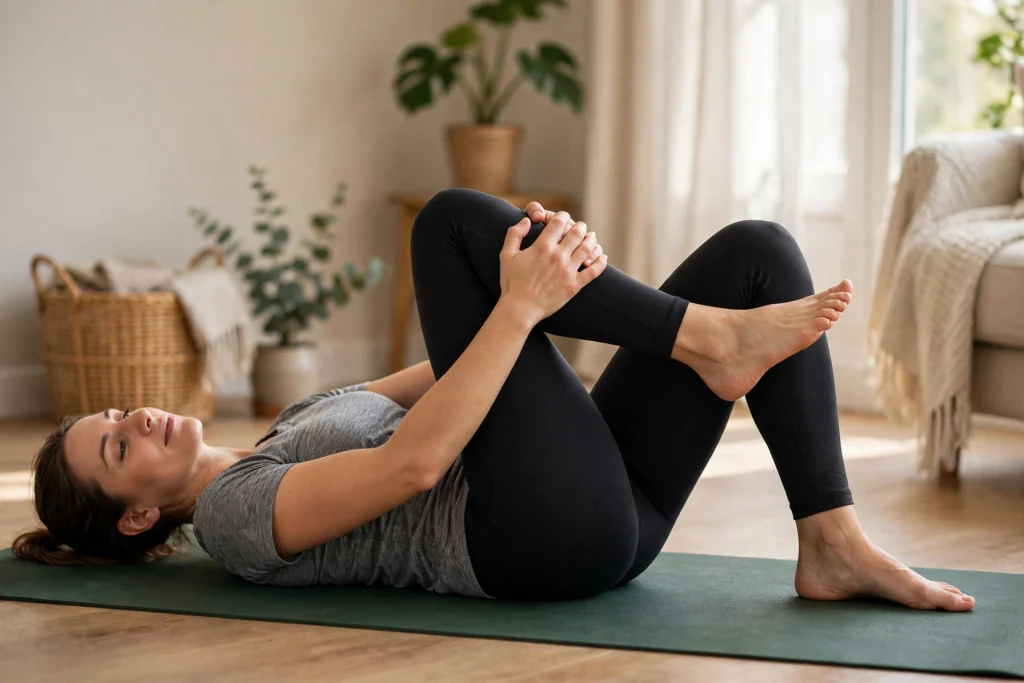
Knee-to-Chest Stretch
The knee-to-chest stretch gently moves the hips and lower back through a comfortable range of motion.
How to do it:
- Lie on your back with both knees bent and feet flat on the floor.
- Slowly bring one knee toward your chest.
- Hold behind your thigh or over your shin without pulling forcefully.
- Hold for about five seconds if comfortable.
- Return your foot to the floor and repeat with the other leg.
Mayo Clinic describes repeating the stretch two to three times. Do not force your knee toward your chest if it causes pain.
Lower Back Rotational Stretch
This movement gently rotates the lower back while your shoulders remain on the floor.
How to do it:
- Lie on your back with your knees bent.
- Keep your feet flat and your shoulders relaxed against the floor.
- Slowly move both knees toward one side.
- Hold for five to ten seconds if comfortable.
- Bring your knees back to the center and repeat on the other side.
Move slowly and stay within a comfortable range. Avoid forcing your knees toward the floor.

Lower Back Flexibility Exercise
This exercise involves gently tightening your abdominal muscles to change the position of your lower back.
How to do it:
- Lie on your back with your knees bent and feet flat.
- Tighten your abdominal muscles.
- Gently flatten your lower back toward the floor.
- Hold for about five seconds.
- Relax and return to your starting position.
Mayo Clinic suggests starting with five repetitions and gradually increasing as the movement becomes easier.
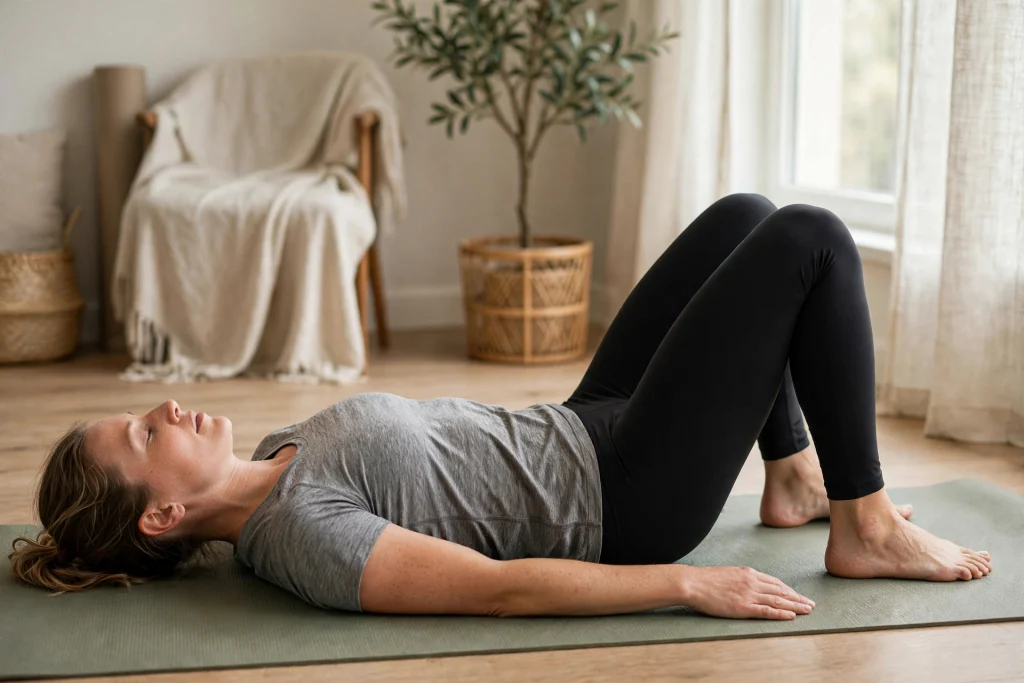
Bridge Exercise
The bridge exercise works the gluteal muscles and other muscles that help support your body.
How to do it:
- Lie on your back with your knees bent.
- Keep your feet flat and approximately hip-width apart.
- Tighten your abdominal and buttock muscles.
- Slowly raise your hips while keeping your shoulders on the floor.
- Hold briefly, then lower your hips with control.
Start with a small number of repetitions. Avoid arching your lower back or pushing through pain.

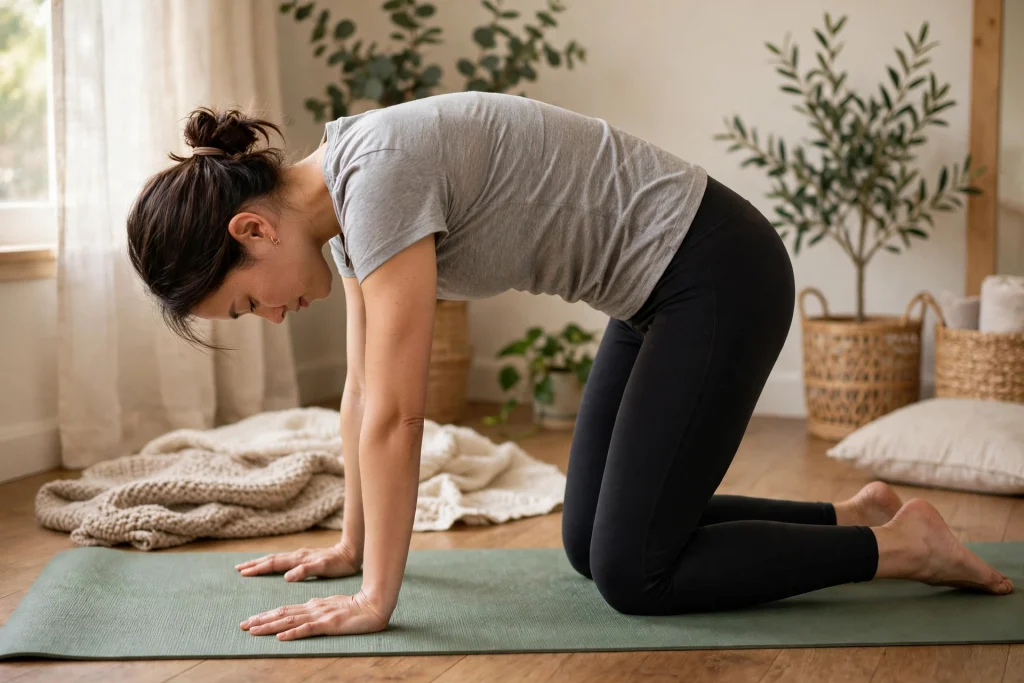
Cat Stretch
The cat stretch moves the spine gently through a rounded and relaxed position.
How to do it:
- Start on your hands and knees.
- Slowly round your back toward the ceiling.
- Gently lower your back toward a comfortable neutral position.
- Keep your movements controlled and avoid forcing the stretch.
- Repeat a few times if comfortable.
Stop if the movement increases your back pain or causes symptoms to spread into your legs.
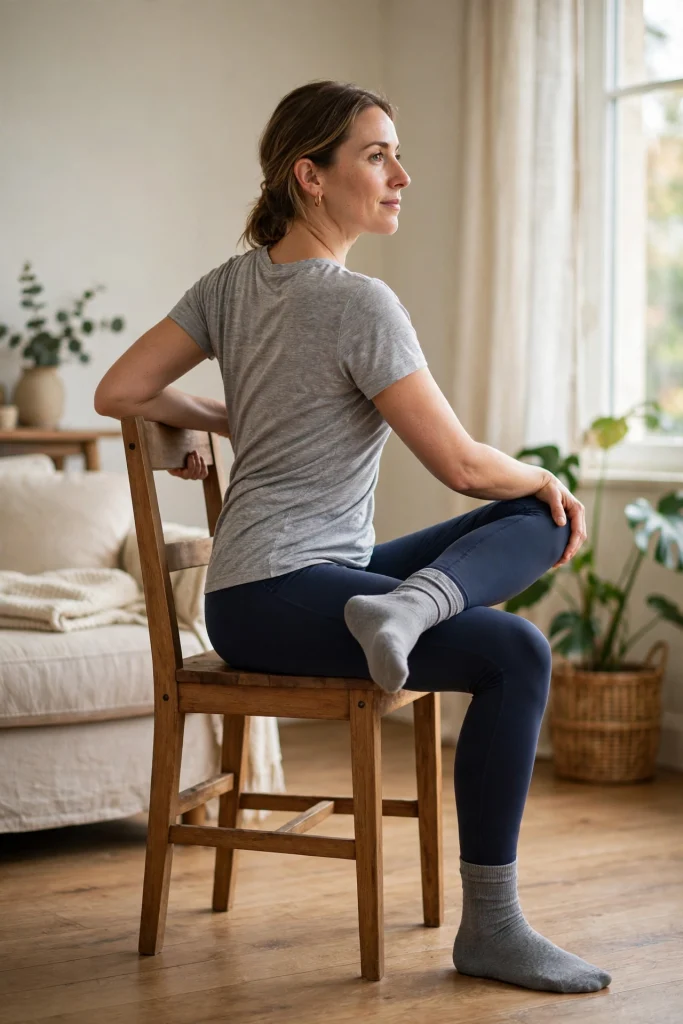
Seated Lower Back Rotational Stretch
This stretch gently rotates your upper body while you remain seated.
How to do it:
- Sit on a stable chair with your feet supported.
- Cross one leg over the other if comfortable.
- Slowly turn your upper body toward the crossed leg.
- Use your hand for light support without pulling forcefully.
- Return to the center and repeat on the other side.
Avoid this movement if twisting causes sharp pain or increases your symptoms.
Lower Back Exercises to Strengthen Your Back
Stretching focuses on flexibility, while strengthening exercises help build the muscles that support your spine and hips.
A suitable exercise routine may include:
Bridge Exercise
The bridge activates your gluteal muscles and abdominal muscles. These muscles help support your pelvis and trunk during everyday activities.
Begin with a few controlled repetitions and gradually increase as your strength improves.
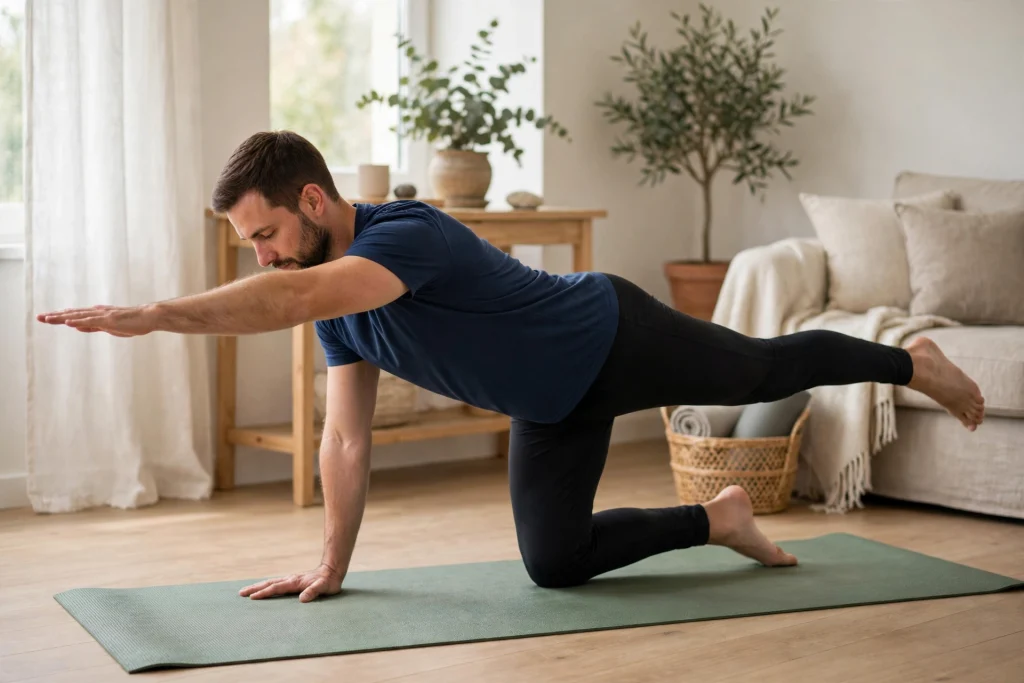
Bird Dog Exercise
The bird dog exercise works your core and back muscles while challenging your balance.
How to do it:
- Start on your hands and knees.
- Tighten your abdominal muscles gently.
- Extend one arm forward while extending the opposite leg backward.
- Keep your back as steady as possible.
- Return to the starting position and switch sides.
Start with a small range of motion. You do not need to lift your arm or leg very high.
Gentle Walking
Walking is also useful as a low-impact activity. It helps you maintain general fitness and stay active without requiring special equipment.
Start with a manageable distance and build up gradually.
How Often Should You Do Lower Back Exercises?
There is no universal exercise schedule that works for everyone. Your routine should depend on your symptoms, fitness level, and any underlying condition.
Start with gentle movements and a small number of repetitions. Increase gradually only when the exercises feel comfortable. If you are beginning an exercise program because of ongoing back pain or a previous injury, consult a physical therapist or another qualified healthcare professional.
What Causes Lower Back Pain?
Lower back pain can develop for several reasons. Sometimes the exact cause is difficult to identify, and symptoms improve over time without a specific treatment.
Common causes include:
Muscle or Ligament Strain
Lifting something heavy, sudden twisting, or doing unfamiliar physical activity can strain muscles and ligaments around the lower back.
This may cause soreness, stiffness, or discomfort when bending and moving.
Herniated or Bulging Disc
The discs between the bones of your spine act as cushions. A disc may bulge or herniate and irritate nearby nerves.
Depending on the affected area, symptoms may include back pain, tingling, numbness, or pain that travels into the leg.
Sciatica
Sciatica describes pain associated with irritation or compression of the sciatic nerve. It often travels from the lower back or buttock down one leg.
Some people also experience tingling, numbness, or weakness. New or worsening weakness needs medical assessment.
Poor Movement Habits
Repeatedly lifting heavy objects with poor technique, staying in one position for long periods, or suddenly increasing physical activity may contribute to back discomfort.
Improving movement habits and building strength gradually may help reduce some of these problems.
Age-Related Changes
As people get older, the discs, joints, and other structures in the spine can change. These changes are common, but they do not always cause pain.
A healthcare professional can help determine whether a particular spinal condition is contributing to your symptoms.
How to Prevent Lower Back Pain
You cannot prevent every episode of back pain, but healthy movement habits can help support your back.
- Stay active: Include walking and other activities you enjoy.
- Strengthen your core: Build abdominal, hip, and back strength gradually.
- Lift carefully: Keep objects close to your body and avoid sudden twisting while lifting.
- Take movement breaks: Change positions regularly during desk work or long drives.
- Maintain a comfortable workspace: Adjust your chair, desk, and screen to reduce unnecessary strain.
- Increase exercise gradually: Avoid suddenly starting an intense workout routine.
- Pay attention to symptoms: Modify activities that repeatedly trigger or worsen your pain.
Consistency matters more than doing difficult exercises occasionally.
When Should You See a Doctor for Back Pain?
Most common episodes of lower back pain are not emergencies. However, certain symptoms can indicate a more serious problem.
Seek emergency medical care.
Call 911 or go to an emergency department if back pain occurs with:
- New difficulty controlling your bladder or bowels.
- Numbness around your genitals, anus, or inner thighs.
- New or severe weakness or numbness in both legs.
- Back pain after a serious accident or injury.
- Back pain with chest pain.
These symptoms can indicate conditions that require urgent assessment.
Arrange a medical appointment if your pain:
- Does not improve after a few weeks of home care.
- Keeps returning or interferes with everyday activities.
- Is becoming progressively worse.
- Occurs with unexplained weight loss.
- Is accompanied by fever or feeling generally unwell.
- Is consistently worse at night.
A healthcare professional can evaluate your symptoms and recommend appropriate treatment.
Frequently Asked Questions
Gentle movement, short walks, heat or cold packs, and comfortable sleeping positions may help with common back pain. Avoid prolonged bed rest and stop activities that make your symptoms worse.
Common gentle movements include knee-to-chest stretches, lower back rotations, pelvic tilts, and cat stretches. The best choice depends on your symptoms and physical condition.
Move slowly, breathe normally, and avoid forcing your body into a deep stretch. Begin with a comfortable range of motion and stop if you experience sharp pain, increasing pain, or new symptoms in your legs.
Appropriate exercises can improve strength, flexibility, and movement. However, the right exercises depend on the cause of your pain. A physical therapist can help develop a routine suited to your needs.
For many common episodes of back pain, gentle activity is preferable to prolonged bed rest. Short walks and normal daily activities may help you maintain mobility, provided they do not significantly worsen your symptoms.
Many common episodes improve within a few weeks, although recovery varies. Pain that persists, becomes worse, or interferes with normal activities should be evaluated by a healthcare professional.
Back pain with bladder or bowel changes, numbness around the groin, severe weakness in both legs, or pain after a serious accident requires emergency medical attention.
Conclusion
Finding effective back pain relief often starts with simple changes: staying gently active, avoiding prolonged sitting, using heat or cold for comfort, and choosing appropriate lower back stretches. Exercises such as knee-to-chest stretches, pelvic tilts, bridges, and cat stretches may help improve movement and strengthen supporting muscles when they are suitable for your condition.
Do not force a stretch or continue an exercise that makes your symptoms worse. If your back pain persists, becomes severe, or comes with warning signs such as leg weakness or bladder changes, seek medical care. A healthcare professional or physical therapist can help you choose a safe and effective plan for recovery.