
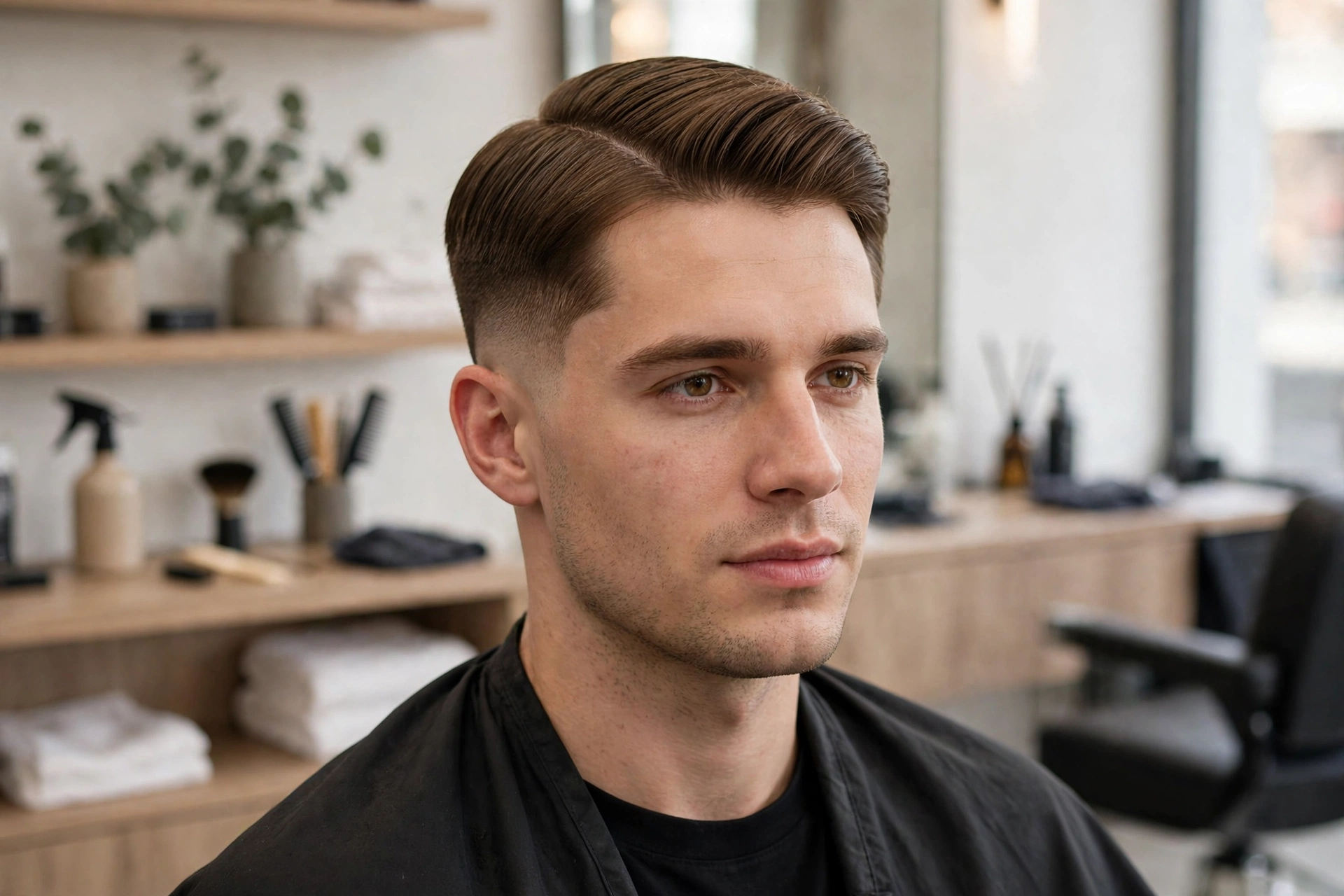
Low Taper Fade Side Part: 25 Classic and Modern Hairstyles for Men
The low taper fade side part is a classic haircut made modern. The hair on top is parted to one side, with a clean part line, while the sides and back are tapered down low for a neat, groomed outline. It suits work, weddings, and everyday wear, and it works on straight, wavy, and curly hair with the right length on top. This guide explains what the cut is, 25 genuinely distinct variations, how to style it, which products suit it, and exactly what to tell your barber.
What Is a Low Taper Fade Side Part?
A low taper fade side part has three parts: a part, a top, and a taper. The part is a line, natural or combed, that divides the top hair to one side. The top is left long enough to sweep to the side, usually a few centimetres, so the part shows clearly. The sides and back are tapered gradually, low near the ears and neckline, rather than faded high or shaved to skin. The taper keeps the cut looking clean without taking attention from the part, which is the feature of the cut. The part can be soft and natural, or sharp and defined with a hard part line, depending on the version you choose.
Why Is the Side Part with Low Taper Popular?
The side part with low taper is popular because it is both classic and easy. The part gives instant structure, so even a quick comb-through looks finished. The low taper keeps the sides neat without a harsh fade, so the cut suits formal and casual settings alike. It grows out well, because a taper blends as it grows, and the top can be restyled as it gets longer. If you want a shorter low taper cut with almost no styling, see Low Taper Fade Buzz Cut, which uses the same low taper idea with a short, even top instead of a parted top.
25 Best Low Taper Fade Side Part Styles
- Classic Side Part: the timeless version, neat part, medium length on top swept to one side, low taper at the sides.
- Modern Side Part: a slightly looser, more textured take on the classic, with a softer part line and natural movement on top.
- Hard Part Side Part: a shaved hard part line defines the part sharply, giving a crisp, structured look.
- Textured Side Part: the top is cut with texture and styled with a matte finish, so the part looks relaxed rather than stiff.
- Quiff Side Part: the front is lifted into a small quiff, then parted to one side, combining height at the front with a side part.
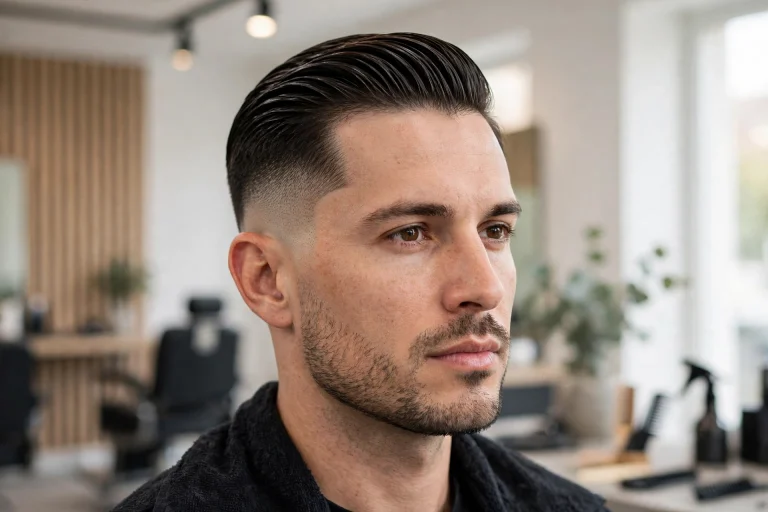
- Slick Side Part: the top is combed smoothly to one side with a shiny finish, the polished, formal version of the cut.
- Short Side Part: a shorter top with a clear part, good for men who want the side part shape with minimal styling.
- Long Side Part: a longer top swept to one side, giving more movement and a softer, fuller shape.
- Side Part with Beard Blend: the taper is blended into a beard, so the sides, beard, and parted top flow together.
- Messy Side Part: the top is styled with loose, messy texture, but the part line keeps it looking deliberate.
- Deep Side Part: the part sits further to one side, giving a strong asymmetric shape with more hair swept across.
- Soft Side Part: the part is gentle and natural, with no hard line, for the most understated version of the cut.
- Voluminous Side Part: extra volume is built into the top, giving height and fullness above a neat low taper.
- Fringe Side Part: a fringe is kept at the front and swept to one side with the part, softening the forehead.
- Wavy Side Part: natural waves are kept on top and swept to one side, with the taper keeping the outline tidy.
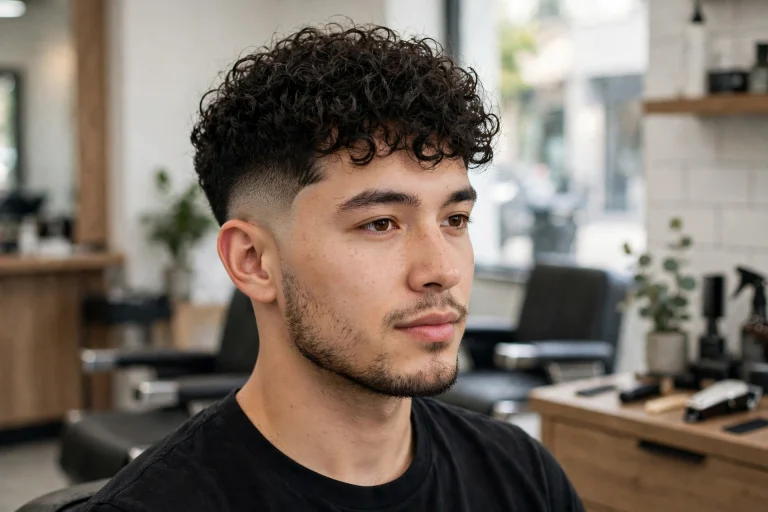
- Curly Side Part: curls are kept on top and parted loosely to one side, with a low taper framing the curl.
- Side Part with Tapered Neckline: the nape is tapered to a clean finish, while the parted top keeps its length.
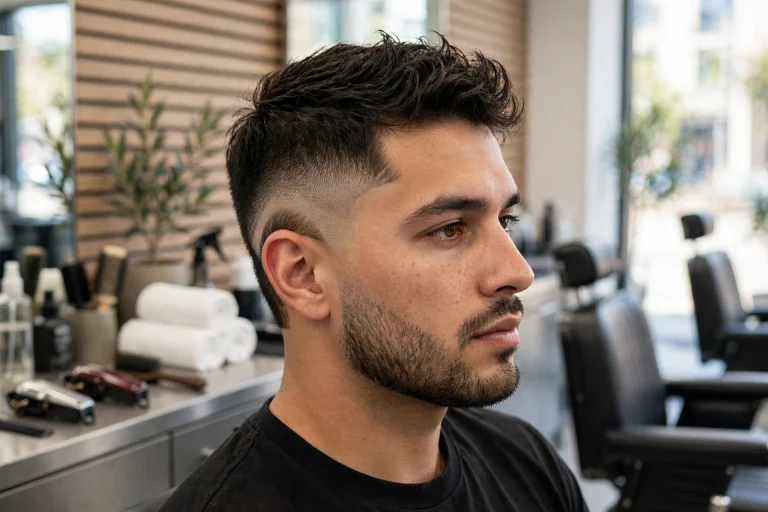
- Side Part with Design Line: a single shaved design line is added to the taper area, a subtle detail on a classic cut.
- Side Part with Faded Temples: the temples are tapered slightly higher than a standard low taper, giving a sharper profile.
- Pompadour-Inspired Side Part: the front is swept up and back with pompadour-like height, then parted to one side.
- Side Part with Longer Top: the top is kept longer than usual and swept to one side, for men who want more styling options.
- Side Part for Thinning Hair: the top is combed to one side to give coverage, with a neat low taper, a practical version for thinning hair.
- Grey Blend Side Part: a side part with a low taper that blends grey hair evenly, giving a natural, distinguished look.
- Choppy Side Part: the top is cut in choppy layers and parted to one side, giving an edgier, more textured shape.
- Natural Finish Side Part: the top is parted and left with almost no product, for the most low-key, natural version.
Best Side Part Styles for Different Hair Types
Straight hair suits the classic, slick, and hard part versions, because straight hair shows a clean part line clearly. Wavy hair suits the textured, messy, and wavy versions, because wave adds movement to the parted top. Curly hair suits the curly and soft side part versions, because a looser part works better than a sharp line on curls. Thick hair benefits from textured or choppy layering, which removes bulk from the top. Fine hair benefits from voluminous and short versions, which create the look of fullness. Tell your barber your hair type first, because the top length and layering change with it.
Best Face Shapes for a Side Part
Oval faces suit most side part versions, because the face is already balanced. Round faces suit deep side part and voluminous versions, because asymmetry and height lengthen the look of the face. Square faces suit soft side part and textured versions, because softness balances a strong jaw. Long faces suit short side part and fringe versions, because they avoid adding too much height on top. Heart-shaped faces suit side part with beard blend versions, because the beard adds fullness lower on the face. These are guides, not rules, and a barber will adapt the part position to your face in person.
How to Style a Side Part
Start with damp hair. Find your natural part by combing the hair back and seeing where it falls, or choose a part position with your barber. Comb the larger side across and slightly back, and the smaller side down and back, following the taper. For a slick finish, use a shiny product and comb smoothly. For a textured finish, use a matte product and work it through with your fingers, then define the part with a comb. Blow-dry the top in the direction of the part for more hold and volume, and finish with a light product to set it. The part should stay visible all day, so check it in a mirror from the side, not just the front.
Best Products for a Side Part
Product types, not specific brands or tested recommendations: pomade gives shine and hold for slick versions. Matte clay gives texture and a natural finish for textured and messy versions. Styling cream gives light hold and softness for soft and natural versions. Sea salt spray adds texture to wavy hair before styling. Hairspray, used lightly, helps a part hold in humid weather. Use a small amount first, because too much product flattens the top and hides the part. Wash product out regularly, because build-up makes the part look heavy.
How to Explain This Cut to Your Barber
Bring a photo of the version you want, and be specific about four things: the part, the top length, the taper, and the finish. Say: a side part with a low taper fade, not a high fade. State the part, natural or hard part line, and which side. State the top length, short, medium, or long. State the taper, low and gradual. State the finish, beard blend or clean neckline, and any design line. Ask how often to return for a taper tidy, usually every 3 to 4 weeks, while the top can grow longer between cuts.
Low Taper Side Part vs. Classic Taper
| Feature | Low Taper Side Part | Classic Taper |
|---|---|---|
| Sides | Tapered low with a faded blend near ears and neckline | Gradually tapered all around, no fade blend. |
| Part | Clear part line is the feature | Part optional, less defined. |
| Top | Swept to one side, medium length | Often shorter or less styled. |
| Finish | Modern, groomed, defined | Traditional, softer, less contrast. |
| Maintenance | Taper tidy every 3 to 4 weeks | Trim every 4 to 6 weeks. |
| Best for | Men wanting a defined, modern classic | Men wanting the softest traditional taper. |
Frequently Asked Questions About the Low Taper Fade Side Part
Part on the side your hair naturally falls to, which you can find by combing it back and seeing where it splits. If you are unsure, ask your barber to try both sides, because face shape and hair growth direction affect which side looks better.
Yes, with a looser part and enough length on top for the curl to form. A hard part line suits straight hair better, while curly hair suits a soft, natural part.
Style damp hair in the direction of the part, use a product with enough hold for your hair type, and finish with a light hairspray in humid weather. Check the part from the side during the day, not just the front.
A low taper side part has a faded blend low near the ears and neckline, and a defined part as its feature. A classic taper is gradually tapered all around with no fade blend, and the part is optional and less defined.
Every 3 to 4 weeks for a taper tidy, with the top shaped less often, as it grows.
Yes. A side part with a beard blend works well, because the taper flows into the beard. Tell your barber you want the blend, so there is no hard line between the taper and the beard.
Conclusion
The low taper fade side part endures because it is structured without being stiff. Pick your part, natural or hard, choose a top length that suits your hair type, keep the taper low and tidy, and the cut will look finished with a quick comb-through. It is a classic that still looks current, which is why it keeps coming back.



2 Comments