
Low Taper Fade Modern Mullet: 25 Stylish Haircut Ideas for Men in 2026
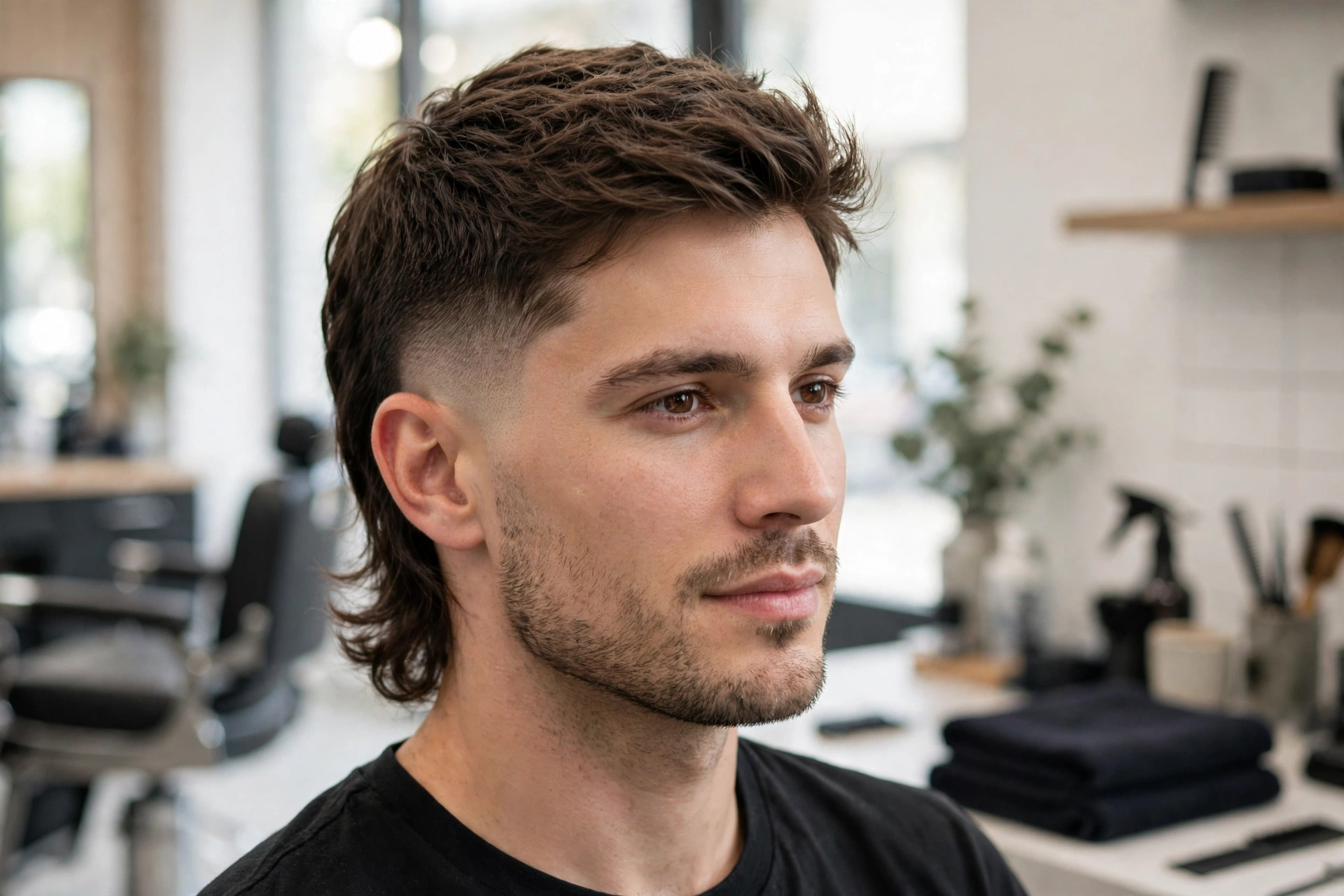
The low taper fade modern mullet is one of the most wearable versions of the mullet comeback. It keeps the mullet shape, shorter at the front and sides with more length at the back, but it softens the edges with a low taper fade that gradually shortens the hair near the neckline and above the ears. The result looks intentional and clean, not messy for the sake of it, and it works for everyday wear, work, and nights out. This guide explains what the cut is, why it suits so many men, 25 genuinely distinct variations, and exactly what to tell your barber.
What Is a Low Taper Fade Modern Mullet?
A low taper fade modern mullet combines two ideas. The mullet part means the top and front are kept shorter, while the back is left longer, creating the classic business in the front, party in the back shape in a softer, modern form. The low taper fade part means the hair at the sides and back is gradually tapered down low, near the ears and neckline, rather than faded high up the head. The taper keeps the sides neat and the transition smooth, while the length on top and at the back gives the cut its character. Unlike a skin fade, a taper does not shave the hair down to skin, so the grow-out is softer and the cut stays wearable between trims.
Why Is the Modern Mullet with Low Taper So Popular?
The modern mullet with low taper is popular because it balances edge and wearability. The low taper makes the cut look groomed, so it passes in more settings than a raw, grown-out mullet. The longer back adds personality without demanding heavy daily styling. The top can be textured, curled, waved, or slicked, so the same basic cut adapts to different hair types and personal styles. It also grows out gracefully, because a taper blends as it grows, which means fewer awkward in-between stages than a sharp, high-contrast cut.
25 Best Low Taper Fade Modern Mullet Hairstyles
- Classic Modern Mullet: the balanced version, neat tapered sides, medium length on top, and a clean longer back that sits just above the collar.
- Textured Modern Mullet: the top is cut in short, choppy layers and styled with texture, giving a lived-in finish that suits straight and wavy hair.
- Tight Curls Modern Mullet: tight curls are kept full on top and at the back, with a low taper cleaning up the sides so the curl shape stays clear.
- Loose Curls Modern Mullet: soft, loose curls fall naturally over the top and back, with the taper keeping the outline tidy.
- Natural Waves Modern Mullet: the hair’s natural wave does the work, with light layering on top and a longer wavy back.
- Beach Waves Modern Mullet: a relaxed, tousled wave through the top and back, styled with a light product for movement rather than hold.
- Short Modern Mullet: a compact version with a shorter top and a back that ends just past the neckline, good for a first mullet.
- Long Modern Mullet: the back is grown well past the neckline for a bolder shape, while the low taper keeps the sides from looking heavy.
- Messy Modern Mullet: intentionally undone texture on top, with a taper that stops the mess from looking unkempt.
- Tousled Modern Mullet: soft, airy volume on top with a gently tousled back, lighter and neater than a fully messy version.
- Two-Block Inspired Modern Mullet: inspired by the two-block cut, with a clear contrast between a fuller top and tapered sides, flowing into a mullet back.
- Soft Korean-Inspired Modern Mullet: a softer, rounded shape with gentle layers and a neat taper, popular in Korean-inspired styling.
- Choppy Fringe Modern Mullet: a short, choppy fringe at the front adds edge, while the back keeps its mullet length.
- Long Fringe Modern Mullet: a longer fringe falls over the forehead, giving a softer front that contrasts with the tapered sides.
- Side-Swept Fringe Modern Mullet: the fringe is swept to one side, which suits men who prefer an asymmetric front.
- Slicked Back Modern Mullet: the top is combed back smoothly, giving a polished front with a longer, flowing back.
- Feathered Layers Modern Mullet: fine, feathered layers through the top and back create soft movement and reduce bulk in thick hair.
- Shaggy Modern Mullet: longer, shaggy layers all over give a relaxed, rock-inspired shape, kept in check by the low taper.
- Tapered Neckline Modern Mullet: the nape is tapered to a clean, short finish, while the back above it keeps its length.
- Flowing Nape Modern Mullet: the nape is left longer and flowing, for men who want the back to be the clear feature of the cut.
- Disconnected Top Modern Mullet: the top is cut with a visible disconnect from the tapered sides, giving a sharper, more editorial shape.
- Volume on Top Modern Mullet: extra height and volume on top balance a longer back, good for fine hair that needs lift.
- Flat and Sleek Modern Mullet: the top lies flat and smooth, a minimal, neat version that suits straight hair and formal settings.
- Design Line Modern Mullet: a single shaved line is worked into the taper area, adding a subtle design without changing the mullet shape.
- Geometric Design Modern Mullet: a bolder geometric pattern is shaved into the taper, for men who want the design to stand out.
Best Low Taper Mullet for Different Hair Types
Straight hair suits the classic, slicked back, and flat and sleek versions, because straight hair shows clean lines well. Wavy hair suits the natural waves, beach waves, and textured versions, because wave adds movement with little effort. Curly hair suits the tight curls and loose curls versions, because the taper frames the curl instead of fighting it. Thick hair benefits from feathered or shaggy layers, which remove bulk. Fine hair benefits from volume on top and textured versions, which create the look of fullness. Tell your barber your hair type first, because the same mullet shape needs different layering for each type.
Best Face Shapes for a Modern Mullet
Oval faces suit most versions, because the face is already balanced, so the choice comes down to hair type and preference. Round faces suit versions with height on top, such as volume on top or textured, because height lengthens the look of the face. Square faces suit softer versions, such as soft Korean-inspired or side-swept fringe, because softness balances a strong jaw. Long faces suit versions with fringe or width at the sides, such as long fringe or tousled, because they avoid adding more height. Heart-shaped faces suit versions with some fullness at the sides and back, which balance a narrower chin. These are guides, not rules, and a good barber will adapt the cut to your face in person.
How to Ask Your Barber for This Haircut
Be specific, and bring a photo of the version you want. Say: a modern mullet with a low taper fade, not a high fade and not a skin fade. State the top length, for example short and textured, or longer and wavy. State the back length, for example just past the neckline, or longer and flowing. State the neckline finish, tapered and clean, or left longer. Mention the fringe, if you want one, and whether you want a design line. Ask how often to return for a taper tidy-up, usually every 3 to 4 weeks, while the top and back can grow longer between cuts.
How to Style a Modern Mullet
Start with damp hair. For texture, work a small amount of matte styling product through the top, scrunch lightly, and let it dry naturally or with a diffuser for curls and waves. For a slicked back version, comb the top back with a light hold product while the hair is damp. For volume, blow-dry the top upward with a round brush, then set it with a light product. For the back, keep it simple: brush it into shape and let its natural fall show. Avoid heavy, shiny products unless you want the slicked look, because they can weigh the top down and flatten the texture.
Maintenance and Hair Care Tips
Get the taper tidied every 3 to 4 weeks to keep the sides neat, even if you let the top and back grow. Trim split ends at the back every 6 to 8 weeks so the length stays healthy. Wash with a shampoo suited to your hair type, and condition the longer back regularly, because longer hair dries out faster. Avoid over-washing curly and wavy versions, which can lose their natural pattern. Sleep on a silk or satin pillowcase if the back tangles easily. If you use heat styling, use a heat protectant first.
Low Taper Mullet vs. Traditional Mullet
| Feature | Low Taper Modern Mullet | Traditional Mullet |
|---|---|---|
| Sides | Gradually tapered low near ears and neckline | Often longer or unblended at the sides. |
| Top | Textured, styled, or slicked with intention | Often flatter or less shaped. |
| Back | Longer but shaped and layered | Longer, often grown out with little shaping. |
| Overall look | Clean, modern, wearable daily | Bolder, rawer, retro. |
| Maintenance | Taper tidy every 3 to 4 weeks | Less frequent shaping, more grow-out. |
| Best for | Men wanting edge with wearability | Men wanting the boldest retro shape. |
Frequently Asked Questions About the Low Taper Fade Modern Mullet
Yes, in most workplaces, because the low taper keeps the sides neat and the shape looks intentional. Choose a shorter, neater version, such as the classic or flat and sleek mullet, for formal settings, and check your workplace dress code first.
The back should be visibly longer than the top, at least past the neckline for a short modern mullet, and longer for a bolder version. Your barber can shape the back at any length, but without extra length at the back it is not a mullet.
Yes. Curly hair suits this cut well, because the taper frames the curl and the longer back shows the curl pattern. Ask for layers that follow your curl, not against it.
Get the taper tidied every 3 to 4 weeks to keep the sides neat. The top and back can grow longer between cuts, with a shape trim every 6 to 8 weeks.
A low taper gradually shortens the hair low near the ears and neckline, without shaving to skin. A low fade can go shorter and create a stronger contrast, sometimes down to skin. A taper grows out more softly than a fade.
Yes, especially with wavy or curly hair, where the natural pattern gives shape. Straight or fine hair usually needs a light product for texture or volume, but the cut itself should hold its shape without heavy styling.
Conclusion
The low taper fade modern mullet works because it keeps the mullet’s character and removes its rough edges. The low taper makes it neat, the top gives it style, and the longer back gives it personality. Pick the version that matches your hair type and face shape, bring a photo to your barber, and keep the taper tidy every few weeks. Done that way, this is a cut that looks deliberate every day, not just on the day you leave the barbershop.


2 Comments