
Low Taper Fade Textured Fringe: 25 Trendy Hairstyles for Men
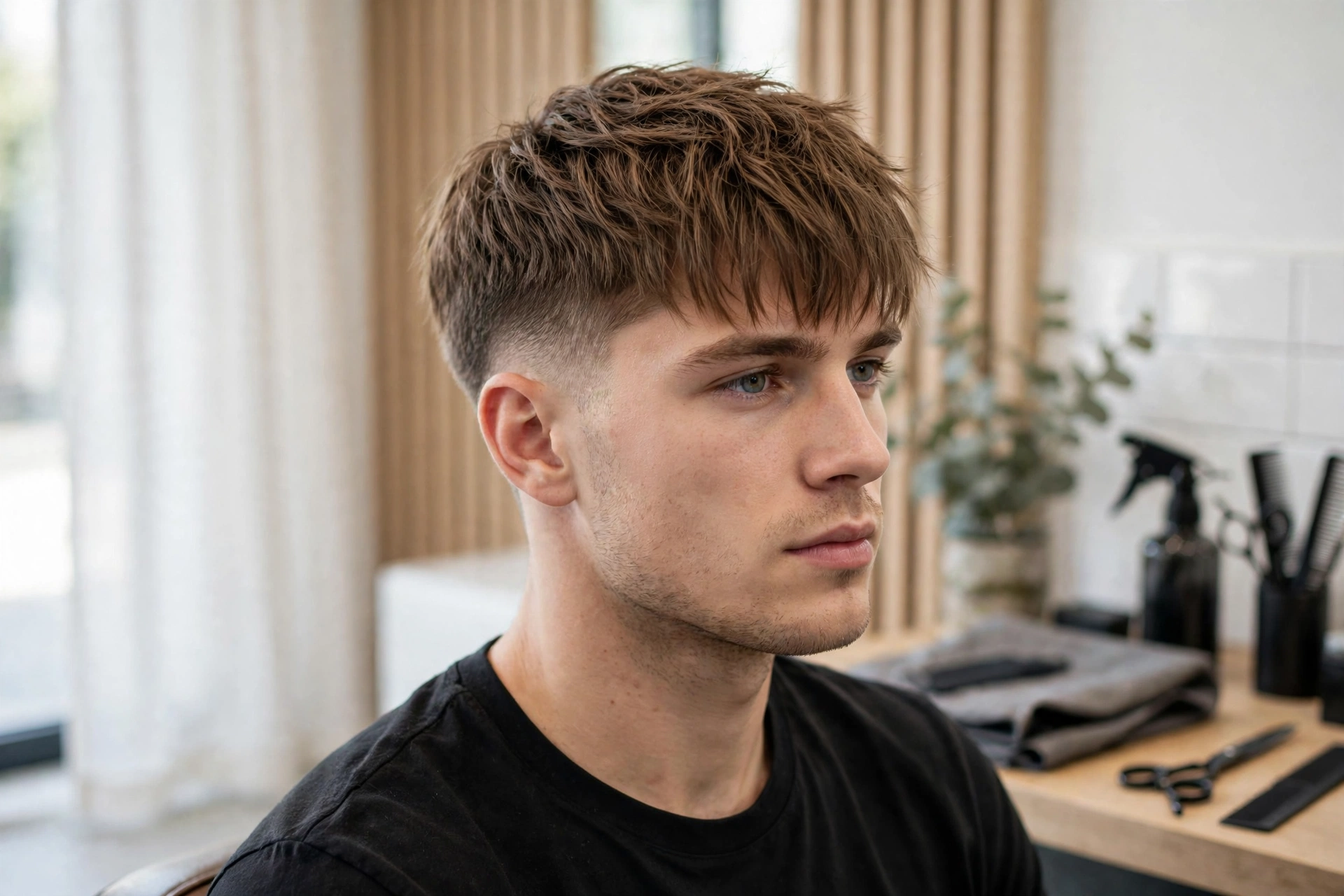
The low taper fade textured fringe is a modern haircut built around the front. The fringe is cut with texture and worn forward, across the forehead, while the top stays short and the sides and back are tapered down low for a clean outline. It suits straight, wavy, and curly hair, it softens the forehead, and it needs only a few minutes of styling. This guide explains what the cut is, 25 genuinely distinct variations, how to style a fringe, and exactly what to tell your barber.
What Is a Low Taper Fade Textured Fringe?
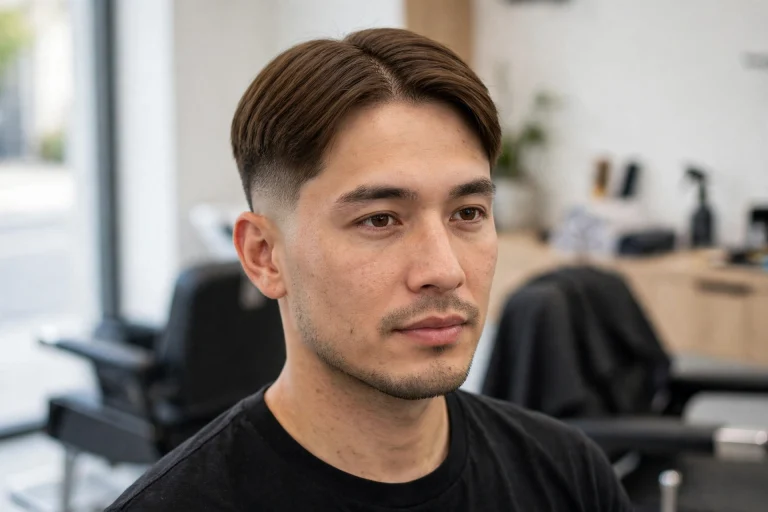
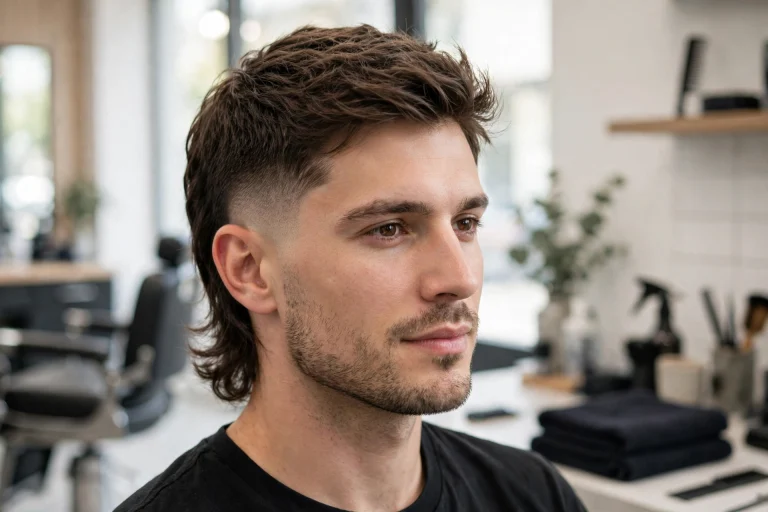
A low taper fade textured fringe has a textured fringe, a short top, and a low taper. The fringe is the feature: hair at the front is cut in varied, choppy lengths so it does not lie flat, and it is worn forward over the forehead. The rest of the top is short and textured to match. The sides and back are tapered gradually, low near the ears and neckline, rather than faded high or shaved to skin. The low taper keeps the cut groomed, while the fringe gives it character. A textured fringe is different from a blunt fringe: a blunt fringe is cut straight across in one even line, while a textured fringe is cut in varied lengths for a softer, broken-up edge.
Why Is Textured Fringe Popular?
Textured fringe is popular because it is youthful, soft, and easy. The fringe frames the face and softens the forehead, which suits men who want a feature at the front without a tall quiff or a high fade. The texture means the fringe does not need careful combing, so a quick tousle is enough. The low taper keeps the sides neat, so the cut works for work and casual settings. If you want the full short crop shape behind the fringe, see Low Taper Fade Textured Crop, which keeps the same low taper idea with a short, textured top and a fringe as part of the crop.
25 Best Low Taper Fade Textured Fringe Styles
- Classic Textured Fringe: the balanced version, textured fringe worn forward, short top, low taper at the sides.
- Messy Textured Fringe: the fringe is styled with loose, messy texture, a relaxed version of the classic fringe.
- Short Textured Fringe: a short fringe sitting high on the forehead, with a low taper outline.
- Long Textured Fringe: a longer fringe falling lower over the forehead, giving a softer, fuller front.
- Curly Textured Fringe: curls are kept in the fringe and worn forward, with a low taper framing the curl.
- Wavy Textured Fringe: natural waves are kept in the fringe and styled forward, with a low taper outline.
- French Fringe Style: a blunt-inspired fringe softened with texture, inspired by the French crop shape.
- Choppy Textured Fringe: the fringe is cut in strongly choppy layers, giving the most broken-up, edgy edge.
- Forward Textured Fringe: the fringe is swept straight forward, with no side direction, for a clean forward finish.
- Asian Fringe: a thin, airy, see-through fringe, inspired by Korean fringe styling, with a low taper.
- Textured Fringe with Line-Up: a sharp, shaped hairline at the forehead and temples, paired with a textured fringe and low taper.
- Textured Fringe with Design Line: a single shaved design line in the taper area adds detail to a classic fringe.
- Textured Fringe with Beard Blend: the taper is blended into a beard, so the sides, beard, and fringe flow together.
- Textured Fringe with Side Sweep: the fringe is swept slightly to one side, a softer alternative to a straight forward fringe.
- Textured Fringe with Volume: extra volume is built into the top above the fringe, giving height with a forward front.
- Textured Fringe with Tapered Neckline: the nape is tapered to a clean finish, while the fringe keeps its length.
- Textured Fringe with Faded Temples: the temples are tapered slightly higher than a standard low taper, giving a sharper profile.
- Textured Fringe with Hard Part Line: a shaved hard part line is added to one side, giving structure to the fringe.
- Tousled Textured Fringe: the fringe is styled with soft, airy tousle, lighter and neater than a fully messy fringe.
- Sleek Textured Fringe: the fringe is smoothed down with a light product, a neater, more polished version.
- Textured Fringe for Thick Hair: the fringe is layered to remove bulk, so thick hair sits neatly in a fringe shape.
- Textured Fringe for Fine Hair: dense, short texture creates the look of fullness in fine hair, including in the fringe.
- Grey Blend Textured Fringe: a textured fringe with a low taper that blends grey hair evenly, giving a natural, distinguished look.
- Natural Finish Textured Fringe: the fringe is left with almost no product, for the most low-key, natural version.
- Disconnected Textured Fringe: the fringe top is cut with a visible disconnect from the tapered sides, giving a sharper, more editorial shape.
Best Fringe for Different Hair Types
Straight hair suits the classic, French fringe style, and choppy versions, because straight hair shows fringe texture clearly. Wavy hair suits the wavy, messy, and tousled versions, because wave adds natural texture to the fringe. Curly hair suits the curly version, because the curl gives the fringe shape on its own, and the fringe should follow the curl pattern. Thick hair benefits from layering that removes bulk, as in the thick hair version. Fine hair benefits from short, dense texture, as in the fine hair version, which creates the look of fullness. Tell your barber your hair type first, because the fringe length and layering change with it.
Best Face Shapes for a Textured Fringe
Oval faces suit most fringe versions, because the face is already balanced. Round faces suit volume and longer fringe versions, because height and a longer front lengthen the look of the face. Square faces suit softer versions, such as tousled, messy, and natural finish, because softness balances a strong jaw. Long faces suit short fringe versions, because a short fringe avoids covering too much of the face and keeps balance. Heart-shaped faces suit fringe with beard blend versions, because the beard adds fullness lower on the face. These are guides, not rules, and a barber will adapt the fringe length to your face in person.
How to Style a Textured Fringe
Start with damp hair. Work a small amount of matte product through the top and fringe, then tousle with your fingers in a forward direction, so the fringe falls naturally over the forehead. For more texture, twist small sections of the fringe lightly as you style. For a sleeker finish, comb the fringe forward smoothly with a light product. Blow-dry on a low setting, scrunching lightly, if you want more volume above the fringe. Avoid heavy, shiny products, because they flatten the texture and make the fringe look greasy. Check the fringe length in a mirror: it should sit where you want it, not in your eyes, unless you prefer a longer fringe.
What to Tell Your Barber
Bring a photo of the version you want, and be specific about four things: the fringe length, the fringe texture, the taper, and the finish. Say: a textured fringe with a low taper fade, not a high fade. State the fringe length, short, medium, or long. State the fringe texture, choppy, soft, or blunt-inspired. State the taper, low and gradual. State the finish, line-up or natural hairline, beard blend or clean neckline. Ask how often to return for a taper tidy, usually every 3 to 4 weeks, and for a fringe trim, because the fringe grows into your eyes faster than the rest.
Maintenance Tips
Get the taper tidied every 3 to 4 weeks to keep the sides neat. Get the fringe trimmed between full cuts if it starts to sit in your eyes, or ask your barber to show you how to trim just the fringe. Get the textured top reshaped every 4 to 6 weeks, because texture grows out into bulk if left too long. Wash with a shampoo suited to your hair type, and avoid over-washing, which can dry the fringe out. Keep product use light, and clean the forehead after workouts, because a fringe traps sweat and product against the skin.
Textured Fringe vs. French Crop
| Feature | Textured Fringe | French Crop |
|---|---|---|
| Fringe | Textured, varied lengths, forward | Blunt, straight, usually short. |
| Top | Short and textured to match the fringe | Short, often more even. |
| Finish | Relaxed, modern, tousled | Neat, classic, structured. |
| Styling | Matte product, finger tousle forward | Light product, combed forward. |
| Sides | Low taper fade | Often taper or fade, varies. |
| Best for | Men wanting a soft, textured front | Men wanting a neat, classic short crop. |
Frequently Asked Questions About the Low Taper Fade Textured Fringe
A textured fringe is cut in varied, choppy lengths for a softer, broken-up edge. A blunt fringe is cut straight across in one even line, giving a sharper, more defined edge.
Yes. A curly textured fringe uses the curl’s natural shape, worn forward, with a low taper framing it. Ask for a fringe that follows your curl pattern.
It depends on the version: short fringes sit high on the forehead, while long fringes fall lower over it. Your barber will set the length based on your face shape and preference, and you should trim it before it sits in your eyes.
Every 3 to 4 weeks for a taper tidy, with a fringe trim between full cuts if it grows into your eyes, and a top reshape every 4 to 6 weeks.
Yes, especially with wavy or curly hair, where the natural pattern gives texture. Straight or fine hair usually needs a small amount of matte product for texture and hold.
Yes, in most workplaces, because the low taper keeps it neat and the fringe looks intentional. Choose a shorter, neater version, such as the classic or sleek fringe, for formal settings.
Conclusion
The low taper fade textured fringe works because the front does the talking. The textured fringe gives softness and character, the short top keeps it easy, and the low taper keeps it groomed. Pick the fringe length and texture that suit your hair type, keep the taper tidy and the fringe trimmed, and style it in minutes with a matte product. It is modern, youthful, and wearable every day.

One Comment